All What You Need To Know About Electronic Monitoring in The Criminal Justice System
Jul 20, 2022

Key points
Electronic Monitoring (EM) seeks variously to reduce the use of imprisonment, monitor compliance, reduce reoffending and support desistance from crime
There are different types of EM: Radio Frequency (RF) tagging, Global Positioning System (GPS) tagging and Remote Alcohol Monitoring (RAM)
First introduced in Scotland on a pilot basis in 1998, EM currently operates using RF tagging technology only
RF tagging with a curfew is most typically used to restrict a monitored person to (or occasionally, away from) a place for a prescribed period of time
GPS tagging can be used to create ‘exclusion zones’ and, more controversially, offers authorities the potential to track the wearer’s location in real time
Type of EM technology is only one consideration for effective use and impact – how, why, with whom and by whom it is used also matters
Debates in Scotland on current and future uses focus on: the potential introduction of GPS tags and alcohol monitoring alongside RF tagging and curfews; and better integration of EM with social work supervision and third sector support
Social workers have a key role to play in ensuring that they are aware of EM technologies and can harness their use to achieve effective community supervision, support integration, promote desistance from crime and offer public protection
Current and new uses should stay anchored in an ethos of proportionality, with an awareness of EM's strengths, limitations and potential misuses to balance rights, risks and interests of all involved
Introduction
Most people are familiar with the concept of a GPS monitoring bracelet that tracks the wearer's location at all times and can't be removed. GPS monitors are usually ankle bracelets that the court orders a defendant to wear when they're on probation, parole, or house arrest. The judge may order a GPS monitoring device before or after a defendant goes on trial for a criminal charge.
Judges may order ankle bracelets in lieu of or in addition to harsher penalties. Often, defendants prefer the limitations of these devices to spending time in jail. If it's possible to wear a GPS ankle bracelet upon a conviction, your defense attorney will likely make a case for the more lenient sentence. Still, wearing a monitoring device is no simple matter.
Electronic monitoring (EM) is a generic term that encompasses a number of monitoring technologies and approaches. It can be used with different people for diverse purposes in youth justice and adult criminal justice systems (Nellis, Beyens and Kampinski, 2013). For the last 30 years, numerous western countries have predominantly used EM to monitor adult offenders’ compliance with curfews and other restrictions. The emergence of new EM technologies opens up new monitoring and surveillance possibilities to authorities, but proportionality and balancing the rights and interests of different people involved are integral to effective and ethical uses of EM. This is reflected in Council of Europe guidance on standards and ethics in EM (Nellis, 2015). This Insight introduces the ways in which EM is currently used in Scotland, alongside international evidence and experience, to identify key issues and implications for use.
Electronic monitoring technologies
There are three main types of EM tagging technology, each of which has differing capabilities, strengths and limitations. Tagging technologies can be used in tandem with professional supervision and supports, or can be used as a ‘stand-alone’ option.
Radio Frequency (RF) tagging technology is a relatively simple and stable form of EM used in Scotland and many jurisdictions around the world (Graham and McIvor, 2015, 2017). It is commonly used to monitor curfews during which monitored people are restricted to a designated place — usually their home — or restricted ‘away from’ a place, for example, a shop in cases of repeated shoplifting, for specified periods of time.
A ‘tag’, also called a Personal Identification Device, is attached to the monitored person’s ankle or, somewhat less commonly, their wrist. It incorporates tamper-resistant technology which can detect attempted or successful removal of the tag. The radio frequency tag transmits a signal to a monitoring unit box installed in their home or another designated location, which monitors the wearer’s presence at (or absence from) that location during prescribed periods of time (i.e. curfew). Staff in an EM centre can telephone the home monitoring unit or send an EM field officer to the property where required. Radio frequency EM does not ‘track’ the movements of monitored people.
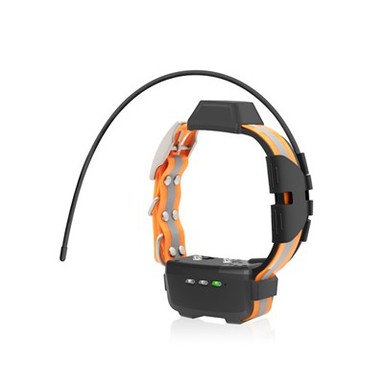
Global Positioning System (GPS) tagging and tracking technology is a global navigation system that uses satellites to track the location, in real time, of a GPS tag. A GPS tag is a tamper-resistant transmitter worn around the ankle that receives transmissions from satellites and identifies the wearer’s location based on the relative strengths of the signals. A mobile phone network communicates the location information to a central computer at an EM centre in ‘real time’, enabling the movements of the tag to be plotted against locations and times. Uses of information from GPS tagging and tracking need to abide by privacy and data protection laws, as do those derived from other forms of EM.
With GPS EM, monitored individuals are usually set location restrictions, which are tailored to each person. An individual may have restrictions around a victim’s house, workplace or school, or another location linked to offending patterns, which act as ‘exclusion zones’. This means that they must stay away from these zones for prescribed amounts of time. There are also ‘buffer zones’ surrounding exclusion zones that, if entered, alert the EM services provider to generate warnings to the monitored person that they are approaching a zone from which they have been excluded. An alert of a violation of the exclusion zone may require police to respond. GPS tags need to be connected to a power source to be re-charged daily or the battery dies, and failure to re-charge may be considered non-compliance.
Finally, Remote Alcohol Monitoring (RAM) can take the form of transdermal alcohol monitoring involving the monitored person wearing an anklet, sometimes referred to as a ‘sobriety bracelet’, which samples sweat on their skin to detect the presence of alcohol. Discussion of RAM is beyond the scope of this Insight, but a detailed review can be found in Graham and McIvor (2015).
Uses of electronic monitoring in Scotland
Electronic monitoring in Scotland is funded by the Scottish Government Community Justice Division. The national service provided by a private sector contractor (currently G4S). First introduced in Scotland on a pilot basis in 1998, EM currently operates using RF tagging technology only at various points in the adult criminal justice system. Elsewhere, a detailed research account of EM in Scotland is provided, including influences of localism and practitioner perspectives on its use (Graham and McIvor, 2015, 2017; McIvor and Graham, 2016).
In the Scottish criminal justice system, EM may be used with adults aged 16 years and older as a means of monitoring compliance with different types of orders and licences:
A Restriction of Liberty Order (RLO), which is a community sentence authorised by the court
A Home Detention Curfew (HDC) licence, which is a form of early release from prison, authorised by the Scottish Prison Service
As a condition of a Drug Treatment and Testing Order, authorised by the court
As a condition of a parole licence, authorised by the Parole Board for Scotland
As a restricted movement requirement imposed following breach of a Community Payback Order (CPO), authorised by the court
Assessments of risk and the suitability of a property for EM are usually conducted in advance by criminal justice social workers to inform decision-making. The length of time that individuals can be monitored varies according to the context and order type. In the case of Restriction of Liberty Orders, monitored persons can be restricted to a particular place for up to 12 hours a day for a period of up to 12 months, or restricted away from a specified place for up to 24 hours a day. Prisoners released subject to a Home Detention Curfew can be monitored at times set by the prison, for example, 12 hour daily curfew from 7pm to 7am, for a period of between two weeks and six months.
The majority of monitored people in Scotland are subject to a Restriction of Liberty Order (RLO) or a Home Detention Curfew (HDC). In 2016, 2,408 RLOs and 1,445 HDCs were made, with men comprising the majority of both the former (85%) and the latter (89%). By contrast, during the same period only 20 restricted movement requirements following a breach of a Community Payback Order were imposed, while 28 individuals were made subject to EM as a condition of parole (G4S, 2017).
Electronic monitoring is also available to use with children under the age of 16 years old through the Children's Hearings System, where a movement restriction condition (MRC) can be imposed as part of an Intensive Support and Monitoring Service (ISMS) order. Electronic monitoring of children is usually framed as seeking to reduce the use of secure care by using EM as an alternative within a support package (see Simpson and Dyer, 2016 for an overview). In Scotland, tagging children has met with some resistance from practitioners and is not widespread in use. In 2016, 20 children received a movement restriction condition via the Children's Hearings System (G4S, 2017).
In looking to advance and expand the uses of EM of adults, the Scottish Government (2013, 2016a, 2017) has initiated consultation papers and practitioner consultation forums, established an EM expert working group to make specific recommendations, conducted a GPS tagging and tracking technology trial, and commissioned an international evidence review (Graham and McIvor, 2015). Current and future uses of EM are framed in terms of seeking to more widely and creatively reduce Scotland’s comparatively high use of imprisonment, and achieve positive outcomes for offenders. Scottish EM discussions focus on two key areas: the potential introduction of GPS tags and alcohol monitoring alongside existing radio frequency EM and curfews; and better integrating uses of EM with social work supervision and third sector support.
Why use electronic monitoring in criminal justice?
Aims and purposes affect uses and outcomes, as EM can be used in different ways which are influenced by the professionals, practice cultures and policy frameworks involved. In its National Strategy for Community Justice the Scottish Government (2016b) proposes that EM can be used more creatively at different points in the criminal justice system and be tailored in such a way as to support specific individual goals. In this section, a number of prominent aims of using EM in criminal justice are summarised, drawing on Scottish and international examples.
Reducing imprisonment
Internationally, a routinely highlighted aim of using EM is to reduce imprisonment. The extent to which EM actually does influence imprisonment rates depends on how it is used, and having the quality and quantity of data needed to demonstrate reductions in isolation from other influences. EM can be used pre-trial to try to reduce the use of remand in custody; used post-conviction as a community sentence (a form of diversion or alternative to a prison sentence); or used as a form of early release from prison or parole with an EM licence condition. Like other community sanctions and measures, EM costs less than imprisonment (Graham and McIvor, 2015).
In some European countries, such as Belgium and Nordic countries, EM is predominantly used (like a replacement) to execute prison sentences in the community on a moderately broad scale. In Nordic countries, uses of EM are led by probation services and usually incorporate supervision with specific conditions, including having a daytime occupation (employment or education) and prohibitions on use of alcohol or drugs (Esdorf and Sandlie, 2014; Kristoffersen, 2014; Andersen and Telle, 2016). In Denmark and Norway, it is argued that there is no risk of ‘net-widening’ — imposing EM on individuals who would not otherwise have received such an onerous sanction — because monitored persons would otherwise be in prison, and EM is not directly available as a sentencing option to the judiciary (Esdorf and Sandlie, 2014). Research with monitored offenders in Norway and Belgium finds that they experience EM as a less severe punishment compared to imprisonment, but that liberty-restrictions within EM are still ‘painful’ (De Vos and Gilbert, 2017). This resonates with the findings of others (Martin and colleagues, 2009).
Monitoring compliance
Another key aim of using EM is to monitor compliance or non-compliance with an order or licence. In Scotland, ‘violations’ of electronically monitored orders include damage to equipment; being absent from the specified place during a curfew; attempting to remove the tag or move the home monitoring unit box; threatening behaviour towards monitoring staff; time violations (arriving late for the start of a curfew); and entering an ‘exclusion zone’ location. When non-compliance reaches a point where the conditions of EM are deemed to have been breached, the monitored person is reported to the relevant decision-maker (court, prison, parole board).
Completion rates are relatively high in Scotland, with approximately eight out of ten electronically monitored orders completed in 2016 (G4S, 2017). This includes monitored people who accrue one or more minor violations that are not deemed so serious as to require their order to be breached (Graham and McIvor, 2015; McIvor and Graham, 2016).
The relatively high levels of compliance with EM in Scotland are echoed in other jurisdictions. For example, in the Netherlands only around 14% of EM orders are revoked (Boone and colleagues, 2016), fewer than 10% of EM orders in Denmark are revoked, while the same is true of fewer than 5% in Norway (Esdorf and Sandlie, 2014) and between 6% and 10% of those made subject to different forms of EM in Sweden (Wennerberg, 2013). The high completion rates found in the Netherlands and Nordic countries may reflect an emphasis placed on community reintegration and ‘normalisation’ in these jurisdictions (Boone and colleagues, 2017; Scharff Smith and Ugelvik, 2017).
As there has been relatively little research focusing on the perspectives and experiences of monitored people, there is limited knowledge regarding why people do or do not comply with EM orders. Hucklesby’s (2009) research shows that factors influencing compliance are complex and include: fear of sanctions (especially imprisonment); awareness of surveillance and being ‘watched’; the reliability and precision of the EM equipment (which meant that any violations would be detected); personal motivation to complete the order; and family and other relationships (which could have a positive or negative impact on the ability to comply). Hucklesby (2009) argues that flexibility and graduated changes, for example, reducing the length of the curfew period, or the days it applies to EM regimes, can be used to motivate and ‘incentivise’ compliance. This approach may enhance perceptions of fairness and help ‘foster reintegration back into society’ (Nellis, 2013, p204).
Reducing reoffending and enabling desistance from crime
Complying with and completing an EM order does not necessarily produce, nor signify desistance from crime. Research evidence linking the use of EM with reductions in reoffending is mixed (Renzema, 2013). Some studies have found that the efficacy of EM in reducing reoffending after monitoring has concluded is modest or minimal or, in some cases, non-existent or negative (Renzema, 2013). In contrast, other studies, especially those from continental Europe and Israel, as well as two large-scale studies from the US state of Florida, indicate a positive impact on reoffending in comparison to other types of penal sanctions, such as imprisonment or community service (Padgett and colleagues, 2006; Bales and colleagues, 2010; Killias and colleagues, 2010; Shosham and colleagues, 2015; Andersen and Telle, 2016; Henneguelle and colleagues, 2016).
There is moderately strong consensus within international evidence and experience that EM should, in many but not all cases, be used in tandem with supervision and support to maximise opportunities for rehabilitation and desistance from crime (Graham and McIvor, 2015; Hucklesby and colleagues, 2016). Without complementary supervision and support, the impact of EM may be limited to its duration, with only modest short-term benefits when monitoring ends.
The Swedish approach to EM is intentionally characterised by a high level of support and a high level of control, with EM used in combination with other forms of supervision, support and surveillance (Wennerberg, 2013; Bassett, 2016).
EM in Sweden — as an alternative to imprisonment or in the context of early release for those who are eligible — requires monitored people to work and participate in activities relevant to their rehabilitation and reintegration. Marklund and Holmberg (2009) compared the outcomes of those on EM early release from prison with those of a control group, finding that the former had significantly lower rates of reoffending in the three year period following release. However, these results relate to an early release initiative, of which EM is only one component.
Research suggests that EM and curfews may contribute to desistance processes in some cases by reducing people’s links with situations, people, places and networks associated with their offending and encouraging them to connect or reconnect with influences associated with desistance, such as family and employment (Hucklesby, 2008; Graham and McIvor, 2016). The structure of an EM regime may bring a level of routine and increased responsibility for some monitored people in reintegration processes (Graham and McIvor, 2016; De Vos and Gilbert, 2017). As a stand-alone measure, however, EM is unlikely to bring about long-term change.