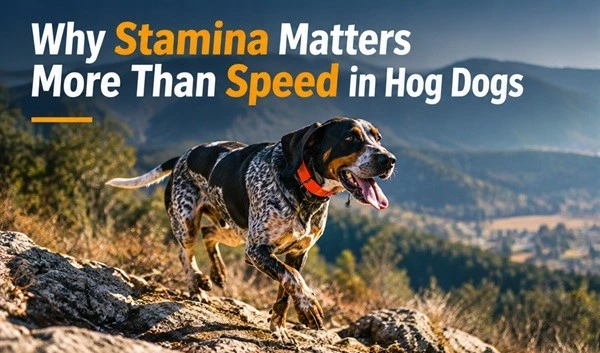
Why Stamina Matters More Than Speed in Hog Dogs
Sep 14, 2026
When it comes to hog hunting, speed is often one of the first qualities hunters notice in a dog. A fast dog can quickly cover ground, close the distance, and locate a moving hog. But speed alone does not determine whether a hog dog will perform well in the field. In many situations, stamina matters far more than raw speed.
A hog hunt can take place across thick forests, steep hills, swamps, fields, and rugged terrain. Unlike a short sprint, hunting a wild hog often requires a dog to work for an extended period. A dog may need to track a scent for miles, pursue a moving hog, stop and relocate repeatedly, and continue working even when conditions become difficult.
The Importance of Endurance
A dog with excellent stamina can maintain a steady level of performance over a long hunt. Instead of exhausting itself during the first few minutes, it can conserve energy and continue tracking when the hunt becomes more demanding.
This is especially important when hunting wild hogs because they are strong, intelligent, and capable of traveling long distances when pressured. A dog that is extremely fast but tires quickly may lose effectiveness before the hunt is over. On the other hand, a dog with strong endurance can keep working when other dogs begin to slow down.
Terrain Can Change Everything
Speed becomes less valuable when the terrain is difficult. Thick vegetation, rocky slopes, mud, water, and fallen trees can significantly reduce a dog's ability to run at maximum speed.
In these conditions, endurance and agility become more important. A strong hog dog needs to climb, jump, turn, and navigate obstacles without using excessive energy. The ability to keep moving efficiently can make a major difference during a long hunt.
Stamina Supports Better Tracking
Hog hunting is not always about chasing at full speed. Sometimes a dog must slow down and carefully follow a scent trail. It may need to search an area, change direction, and continue tracking after losing the trail.
Good stamina allows a dog to remain focused during these situations. Instead of becoming exhausted or losing concentration, an endurance-trained dog can continue working patiently until it finds the hog again.
Building a Better Hog Dog
Stamina is not simply determined by genetics. Proper conditioning, nutrition, hydration, rest, and regular training all contribute to a dog's endurance.
Hunters can gradually improve a dog's fitness through controlled running, longer walks, varied terrain, and consistent field training. However, conditioning should always be increased gradually to reduce the risk of injury and overexertion.
The Real Advantage in the Field
A fast dog may win a short race, but hog hunting is rarely a short race. The real challenge is staying effective throughout the entire hunt.
For this reason, experienced hunters often value a dog that can run efficiently, think clearly, track patiently, and keep working for hours over one that simply has impressive top speed.
In hog hunting, speed can help a dog get there first-but stamina helps it stay in the game. A balanced hog dog with endurance, intelligence, agility, and determination is far more valuable when the hunt gets long, difficult, and unpredictable.