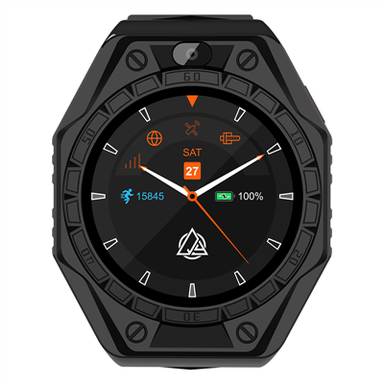
Is Tamper-Proof GPS Tracking Watch Or Wristband Helpful For Government's Epidemic Prevention And Control
Jul 21, 2022
Some people may wonder: Is tamper-proof GPS tracking watch or wristband helpful for government’s epidemic prevention and control? Let’s read some news published as follows to find the answer and see how it works:
To ensure people under compulsory home quarantines do not stray from the confines of their apartments, the Hong Kong government has rolled out tamper-proof electronic tracker wristbands that alert authorities to rogue escapees.
Under a new measure that took effect yesterday, all arrivals to Hong Kong from overseas will have to undergo a mandatory 14-day home quarantine as the city tries to curb the spread of Covid-19, the disease caused by the new coronavirus.
The measure also comes as Hong Kong is experiencing a new spike in cases, almost all of them imported from abroad, as people rush to return to the city from areas perceived as higher risk such as Europe or the US. The city reported 48 new cases today, bringing the total case count to 256, with scientists at the University of Hong Kong warning that the city is now at its highest risk of a sustained local outbreak since the epidemic began in January.
Here’s how the tamper-proof electronic wristbands work. At the airport, all arrivals are given a wristband, each with a unique QR code. The user will then download an app called StayHomeSafe on their phone, and scan the QR code to pair the wristband with the app. Once home, they are to walk around the apartment to calibrate the wristband.
The tamper-proof GPS tracking wristband and the app use what is called geofencing technology, which is different from GPS location tracking, explained Gary Chan, co-founder and director of Compathnion Technology, the local startup behind the app.
“As you walk around the home, the algorithm on the app will sample the signals of the home,” said Chan, who is also a professor of computer science and engineering at the Hong Kong University of Science and Technology. Each home has a unique set of communications signals, including your own WiFi network, WiFi from nearby, Bluetooth, and cellular networks. As the user walks around the apartment, the app creates what Chan described as a “composite signature of the home.” If someone tries to breach the quarantine by leaving their home, the app triggers a warning and alerts the government. Anyone violating their quarantine could face up to six months in prison and a fine of up to HK$25,000 ($3,200).
The government has argued that the wristband poses no privacy concerns because it does not track one’s exact location. As Chan put it, it’s actually “privacy preserving” because it merely looks at signals to deduce whether someone is inside or outside of the home.