Hunting Dog GPS Collar: Which One To Choose And Why?
Aug 16, 2022
Hunting dog GPS collar: which one to choose and why?
Dogs have been loyal companions to humans for millennia. Helpful and accomplices, they are used for many functions such as hunting. Over time and with recent technological prowess, many accessories have been developed for this faithful friend of man. This is for example the case of the hunting dog GPS collar. What is its use? How does it work ? Which model to choose for your dog and where to get it? The answer in this overview of GPS collars for hunting dogs!

USEFULNESS OF A GPS COLLAR FOR HUNTING DOG
There are many reasons why you may want to get a GPS collar for hunting dogs. This connected accessory has serious advantages, both during and outside the hunt.
During the hunt, to secure your dog
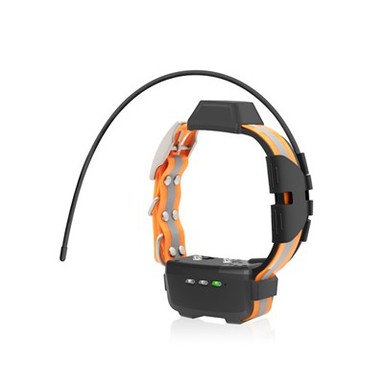
Hunting dog tracking collars are popular with many hunters. And for good reason, this activity is potentially dangerous for the dog who can easily get lost, injured and therefore find himself unable to reach you. It is with this in mind that it is very interesting to equip your dog with a tracker such as the TR Dog GPS collar during this activity.
In addition, a GPS tracking system is very useful when tracking and tracking game such as wild boar or woodcock. You can also spot your teammates and refine your hunting strategy.
However, the use of this type of collar during hunting is regulated. The legislation in force defines the context of use of this accessory during hunting. You are only allowed to stalk your dog during a shoot hunt and only to ensure his safety and avoid possible collisions.
Outside the hunt
Apart from the hunting trails, the GPS collar for dogs also has many advantages. The most obvious is finding your dog. If he is runaway by nature or likes to let off steam a lot, which is common with hunting dogs, it is particularly recommended to equip him with a GPS tracker. Like this, you will be more reassured and will not have to alert your entourage each time of the disappearance of your companion.
In addition, being able to quickly locate your dog limits the risk of it being stolen, attacked by another animal or being run over by a car. A great way to ensure your safety.
HOW A HUNTING DOG GPS COLLAR WORKS
The GPS collar is undoubtedly the most practical solution for knowing your dog's position at all times, without disturbing him as electric pulse collars do. This electronic accessory is equipped with a box that contains a GPS tracker placed around the dog's neck. Thanks to the tracker, it is possible to determine the course of your companion with precision.
The GPS chip ensures the transmission of data on the location of your dog in real time to a device. Powered by a battery, the receiver of the GPS collar collects data from several satellites orbiting the Earth. From this information, the GPS calculates the coordinates of your dog with a margin of error most often small. Similarly, this receiver is responsible for permanently transmitting the position of your pet to a mobile device or more often to an integrated system. This data is refreshed frequently (every three to five seconds) and also allows you to have access to other information such as its speed and direction.
The connected Collars
The connected GPS collar is by far the most popular dog tracking system today. Its operation is based on the use of a GSM network. Subject to capturing the network, this type of collar offers you unlimited coverage. On a mountain or in the forest, you can receive a signal. Some models even have a multi-operator M2M SIM card, which further reduces the risk of signal loss. These devices always require a GSM network subscription or plan.
The Collars with radio waves
This type of collar can be an excellent alternative to the connected collar in areas where the network passes weakly. It works with radio waves such as VHF (very high frequency wave), practical even in remote areas. Its operation does not normally require the availability of networks. Small downside, the range of these collars does not exceed 120 km in an open area (even 14 to 16 km for the most part), and their autonomy is often limited to a few hours (from 20 to 24 hours of autonomy on average). But they precisely compensate for this weakness.
WHICH HUNTING DOG GPS COLLAR TO CHOOSE?
Many models of hunting dog GPS collars are available on the market and making the wisest choice can often be a challenge. To avoid any false note, it is important to rely on objective criteria.
Many criteria to consider
Accuracy, price, weight, features present, autonomy, range…, you cannot ignore these criteria which influence the performance of the collar.
Weight, for example, is an important criterion to ensure good freedom of movement for your dog. A collar that is too sturdy and heavy will not be suitable for a small dog. In terms of prices, two options are often available to you. You can choose a non-subscription model which is much more expensive, but has the merit of saving you money in the long run. If, on the other hand, your budget is limited, you can opt for more affordable models, but which will require a monthly or annual subscription.
When it comes to features, the more the better as a general rule. That said, not all tracking interfaces are optimized for hunting. If you want to take advantage of multi-collar tracking options, team member management, precise IGN maps throughout the national territory, and statistics specific to hunting, such as TR Dog can offer with the Houndmate100/R50 hunting dog gps tracking and training collar , or even Garmin gps collars with Topo maps at 1:25,000, you will need to choose a model designed and recognized for use during hunting.
Autonomy is also an important parameter to consider. For the practice of an activity such as hunting, it is recommended to opt for a model that has a minimum autonomy of 24 to 48 hours for a GPS collar, and 15 to 20 hours for a VHF station. Indeed, if the power fails, you will systematically lose your dog's position. In principle, GPS collars connected via the GSM network, which consume less energy, have a significantly greater autonomy.
Finally, the durability, solidity, waterproof and reliability of the equipment are also essential selection criteria, especially for an outdoor activity such as hunting, where the GPS collar will be regularly put to the test, depending on your hunting ground, in marshy areas, on the edge of ponds, in the mountains, in the middle of the forest or in brambles! The collar must therefore be robust and completely waterproof, to withstand the exploits of your dog over time.
The favorite models of hunters
Most of the models of GPS collars available are certainly not equal. Some are very popular with the hunting community. This is particularly the case with the Alpha from Garmin, but also with the TR Dog Houndmate 100/R50 GPS collar.
The TR Dog Houndmate 100/R50 GPS collar tracking and training collar is particularly suitable for hunting. It comes with both a Radio Frequency and SIM card for network coverage and a specific application dedicated to the needs of hunters. With its competition autonomy estimated at 30 hours, its precision of five meters and its compactness, this is a safe bet.