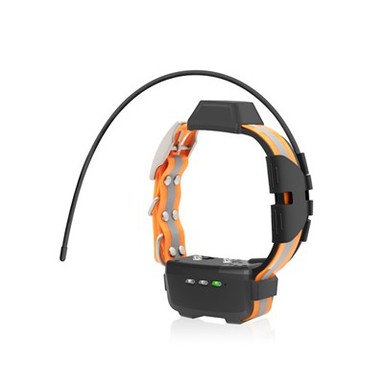
The GPS Tracking Collar, Acclaimed By Hunters: How To Choose It?
Aug 25, 2022
The GPS tracking collar, acclaimed by hunters: how to choose it?
Very useful in the practice of certain outdoor activities, GPS tracking collars are popular accessories for locating dogs from a distance. Originally designed for hunters, these collars have become more popular to meet the needs of a wider range of dog owners. Equipped with a GPS tracker, they can locate an animal in real time and follow its route throughout the day. Let's take a look at these sophisticated devices and discover our tips for choosing the right model.

Why Buy a GPS Tracking Collar?
The GPS tracking collar is a very practical model for tracking your animal and avoiding losing it. It is a very secure solution for lovers of sports activities to share with their pets, for owners who walk their dogs in open spaces without a leash and for those who practice hunting. Indeed, these models of collars are equipped with a GPS tracker which makes it possible to track the animal, that is to say to know its exact position at a given moment, but also to retrace its course during of the day.
GPS tracking collars are widely used by hunters because the practice of this activity is very risky for the dog who can easily get lost, hurt or injured and find himself unable to reach his master. In this way, hunters find their animal more easily. It is for this use that this equipment was created before becoming widespread. However, this is not the only advantage of this collar since it also allows you to find a runaway doggie and retrace its course.
There are several models of GPS tracking collars, but many of them are now linked to smartphone apps. The owner can thus geolocate and follow his animal live with his telephone, but also take advantage of certain gadgets, such as the definition of a distance or a perimeter not to be crossed, knowing the number of calories that the dog loses in spending, etc.
The operation of GPS dog tracking collars is very simple. As the collar is equipped with a GPS tracker, the owner can follow his animal live thanks to the indication of his coordinates in real time through a GPS radar or a receiver. The models linked to applications have interactive maps capable of geolocating the animal for more comfort.
How to choose your GPS tracking collar?
GPS tracking collars have become more popular and abound on the market. There are many collars that can be a good choice from such a wide range of GPS Tracking collars(for example TR Dog Houndmate100/R50 GPS tracking and training collar ). Here are our tips for finding the one that's right for you.

Tip n°1: a device with practical operation
Being able to track your dog using your smartphone is very comfortable and practical for the owner. However, in some wooded or isolated areas, the mobile network may be difficult to receive. In this case, it is recommended to opt for a collar equipped with both a GSM function and a radio frequency. This will maximize the chances of finding your pet.
Tip n°2: a collar with sufficient range
If your pet tracks you and rarely wanders away from you, you don't need a long-range device. However, if you let him roam free during your walks in the forest or in wild spaces, if you have a runaway doggie, if you practice a sporting activity with him in freedom or even if you hunt, it will be necessary that the extent the range of the collar is important. This range is the maximum distance between the collar tracker and the receiver. Take this criterion into account when making your choice.
Tip n°3: a precise accessory
Again, the choice is yours and depends directly on your habits. If you take your animal out into wide open areas, such as fields, meadows or any other open area, reduced accuracy is sufficient. On the other hand, if you move in the forest, in town or in places with reduced visibility, opt for a fine precision of the GPS tracker in order to better locate your dog. This will save you valuable time.
Tip n°4: a tool with sufficient autonomy
The GPS tracker needs to be recharged and works independently when attached to the dog's neck. It is therefore important to invest in a model that offers sufficient autonomy for your practice. If you go out for an hour or two, a poor performing model is enough. But if you practice certain activities such as hunting, you must opt for a minimum of 24 to 48 hours of autonomy.
This is a detail, but it is far from negligible! Consider investing in the purchase of a waterproof GPS tracking collar. Indeed, if your dog bathes, falls into the water, soaks his collar in a puddle or rubs it in the wet grass, the accessory loses its usefulness.