What Are Dog Microchips Vs Tracking Device For Dogs?
Jul 10, 2022

Let's face it,there's often a lot of misunderstandings when it comes to products available to our dog. Specifically, about tracking device and microchips for dogs.
Two common misconceptions are that GPS trackers can be implanted in dogs and other pets and can use microchips that provide GPS tracking. In this article, we'll take a closer look at why these are actually myths, and shed light on the important differences between GPS dog trackers and pet microchips.
If you're like many dog-loving parents, you've probably considered all possible options when it comes to keeping your dog safe. You've heard of microchips and GPS dog trackers and ideas; definitely combine these two into one to create the perfect gps tracking chip for dogs!
As leading experts in wearable pet technology, we certainly agreed that this would be the ideal solution to keep our dog safe and sound. However, it's important to realize that there are currently no dog tracker chips that combine a microchip and a tracking device for dogs in one.
There is no such technology that combines a microchip and tracking device for dogs into one.
It is currently not possible to implant a GPS tracker under a dog's skin, and current microchips for dogs do not provide GPS tracking. The following infographic illustrates the differences between the two technologies, which are further detailed below:
How much does a GPS microchip for a dog cost?
Microchipping your dog can cost anywhere from $0 to $70, depending on where you live and where the surgery is done. Some organisations, such as Blue Cross in the UK, offer this service for free because dog chips are mandatory. But keep in mind that common dog microchips don't contain GPS technology, and you won't be able to use it to track your dog.
On the other hand, you can get a GPS dog tracker for $49 + subscription to track your dog anytime, anywhere.
Microchips for dogs: a simple identification chip
A microchip for dogs is a radio frequency identification (RFID) implant. As the name suggests, the chip is for identification purposes only. It consists of a tiny electronic chip, each with a unique identification code. Packaged in a glass cylinder about 11-14mm long and 2-2.3mm thick, the chip is about the size of a grain of rice. The microchip weighs approximately 0.025 grams.
Currently, microchips are not large enough to accommodate hardware for GPS or other positioning technologies.
Microchipping is only useful if the microchipped dog is lost and then found and taken to the veterinarian. A veterinarian can use a scanner that reads the microchip ID to identify the dog's owner. The Chip ID is associated with the owner's contact information and is registered in the Microchip database.
If your contact information is not up to date, you will not be able to be reached in the event your lost dog is reported found. Ideally, the information related to the chip ID should be kept up to date so that when your dog is taken to the veterinarian, you can be contacted and picked up.
Microchipping has become a common practice and is now legally required in many countries. The advantage of a microchip is that it provides a permanent and secure solution for identifying your dog.
Can a microchip help me find my dog if they get lost?
Unfortunately, the use of microchips is extremely limited. The only possible way to use a microchip is for someone to find your dog, take them to the vet and read the chip. Microchipping dogs won't help when you're looking for a missing dog. As such, microchips are of little use in retrieving lost dogs.
Microchipping dogs won't help when you're looking for a missing dog.
So when you need to act fast to find your beloved dog, relying on a microchip to reunite you with your lost dog isn't the best option. Fortunately, GPS dog trackers provide a real-time solution to safely track and retrieve lost dogs.
GPS Dog Tracker: Real Time Tracking Device for Lost Dogs.Unlike microchips, tracking device for dogs allow you to track your dog in real time, so you can find your dog instantly in case they go missing.
How does tracking device work?
GPS trackers contain GPS antennas and other important hardware that allow the device to locate itself anywhere in the world using GPS satellites. The calculated location coordinates are then sent from the tracker to a server and an app on a smartphone with the help of the local cellular network - just like sending a text message. For this reason, trackers can work anywhere in over 150 countries around the world.
Unlike microchips, GPS trackers allow you to track lost dogs in real time; greatly increasing your chances of retrieving an out-of-control dog.
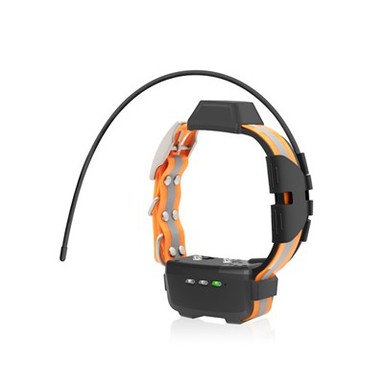
Tr-dog tracking device for dogs is one of the most popular and best selling GPS trackers in the world. This tracker offers dog parents the possibility to track their beloved canine family members in real time using the live tracking feature. So you can view your dog's location, track and retrieve them anytime your dog is wearing a GPS tracker.

Below are some additional features and characteristics of Tr-dog tracking device for dogs:
1. Rapid positioning of GPS/GLONASS/Beidou satellites;
2. It can be used in a mountain environment without signal, and the distance can be up to 15 kilometers;
3. Unlimited distance range with 4G signal .
4. The location is updated every 2.5 seconds, and the update frequency can be adjusted;
5. Real satellite map, easy to check the dog's position and movement track;
6. Level 3 electric shock and vibration function;
7. Remote dog barking recording and monitoring;
8. Compass function, quick check the dog’s direction and distance .
9. Waterproof and anti-fall.
Summary of differences: tracking device for dogs vs microchip for dogs:
In summary, the main differences between tracking device and microchips are outlined below:
1.Function
Despite popular belief, GPS trackers and microchips serve two completely different functions. The microchip allows dogs that have been brought to the veterinarian to be identified based on their microchip ID number. GPS trackers allow you to actively locate your dog in real time.
2.Hardware
To provide the above functions, GPS trackers and microchips rely on different hardware components, each serving a unique purpose. The microchip has the simple function of providing an ID number that can be associated with your dog. Therefore, it consists only of tiny electronic chips encapsulated in glass cylinders. GPS trackers offer a variety of different features to help you locate your dog. Necessary components of GPS tracker include GSM module, GPS antenna, LED light, speaker, battery pack and SIM card.
3.Size
Microchips and GPS trackers vary widely in size due to the capabilities and hardware components of each device. A microchip contains only an electronic chip that can be read by an RFID scanner and is about the size of a grain of rice. In contrast, GPS trackers must be large enough to contain the hardware.

With all this in mind,GPS technology doesn't exist in microchip form at this time,If you are looking for a tracking device for dogs,Tr-dog dog tracker is the best option for you.