Training Retriever Hunting Dogs (Part 2)
Sep 18, 2022
How to train a dog to retrieve?
Before training your dog to retrieve, he must first know the basic commands: namely the commands of position ("Sit", "Lie down", "Stand up" or even "Stay still"), walking on a leash or the reminder again. The ideal is that the dog has already been broken in, and that he is able, on a hunting ground, to remain focused on the sound of your voice, even in exciting contact with game! The more your dog is able to focus on you, the better it will be to keep him safe.
Once the basics are acquired, his training can begin. Keep in mind that training a hunting dog requires rigor and a good dose of patience. Your main objective? Help your dog retrieve game quickly and gently.
The best thing is to socialize it and get it used to navigating various terrains; particularly wetlands such as marshes or lakeshores. Go on short outings (1 or 2 hours a week) and target accommodating biotopes so as not to frighten your puppy.
Take advantage of his young age to familiarize him with shooting: he must associate the detonation with the order to fetch. It is essential that your dog does not flinch when he hears the shot. To limit the risk of accidents, you can practice with a cap gun.
To teach him retrieving, take advantage of your puppy's playful nature: start working in the form of games using, for example, balls. These objects will help you introduce the essential commands to awaken your four-legged friend's instinct for retrieval.
What are the commands to teach your hunting dog?
Those who wish to put the odds on their side call on professional dog trainers. Quite expensive, this decision however ensures that you start on the right footing. You can also join a hunting club or association: specific training is given there for novices.
Of course, it is possible to train your dog on your own! Some commands can be learned at home.
Learn the commands "Take!" ", " Give!" and "Retrieve!" »
It is essential to work for 5 to 6 weeks on the three most important commands for a retriever dog: "Take!" ", " Give!" and "Retrieve!" ". It is advisable, to obtain good results, to practice every day in sessions of 10 minutes, two to three times a day. Only one long session per week will be more stressful for the dog. The risk of him getting stuck or learning very slowly is then high.
To start, the dog must stand still. Then introduce a toy or a log wrapped in a cloth into its mouth, repeating the order: “Take it! ". Do not hesitate to excite him, as in a game session, to push him to recover the contribution. At first, he will have to keep it for a few seconds. If the dog drops the object, you must immediately tell him "No" and put it back in place by repeating the command "Take it!" ". Encourage him with treats so he doesn't associate exercise with punishment. Over time, you can gradually increase the duration.
Then, a very important step, he must let go of the object only after the command “Give” has been pronounced. Absolutely avoid playing who will pull the hardest! Your dog will take even longer to let go. Our advice: reach out with the palm of your hand and briefly tug on the object. The more discerning will instinctively understand the exercise. For the most stubborn, a treat in the other hand is enough to overcome their relentlessness! Repeat the action several times until he finally relaxes the jaw. The command is correctly taught when your dog will automatically release his grip upon hearing "Give!" ". Of course, praise him for every good behavior!
Complicate the exercise by introducing the command “Retrieve!” ". Wait for him to move and put the fake game on the ground in front of him. Then, still walking, follow with the command “Take”. If the previous steps have been carried out correctly, the dog will grab the object. All you have to do is issue the command "Retrieve!" while continuing to walk, even to run straight ahead. The dog will automatically follow you. Stop and finally issue the command “Give!” ". When he is comfortable with the exercise in motion, you can once again intensify the training: gradually move away from the dog and throw your dummy game away with the associated "Retrieve" command.
Introduce the command “Go”
It is necessary, in order to keep control of the comings and goings of the dog, that he does not rush directly at the prey. To do this, wait until he is already comfortable with the “Retrieve” and “Give” commands. Then, teach him the “Go” command, so that he gets moving.
To do this, ask the dog to lie down and not move. Throw your fake duck in the air and make sure that the dog, motionless, correctly spots the target. When the object has fallen, let a second or two pass and then say “Go” to trigger the action.
Which are the mistakes to avoid ?
Nothing better than a quality education to ensure you have an effective retriever dog in the field. However, and despite all your good will, mistakes can be made along the way. Here are the few pitfalls to avoid to succeed in the education of your hunting dog.
Don't skip the steps: be patient with your dog. For example, do not confront him with gunfire too soon without a minimum of preparation. We also advise against having him go hunting, from an early age, without having mastered the basics of obedience and without breaking in. This is the best guarantee to disgust him with hunting!
Take care of your dog: each dog has its own rhythm. Depending on age, race or type of biotope, the level of endurance and efficiency will differ. Learn to understand your companion and don't ask him for more than he can provide. It is about his health.
What gear should I use for fetch hunting?
Unfortunately, our faithful companions are not immune to injuries and accidents on the hunting grounds. Do you want to protect your doggie? Discover a range of useful equipment to limit all types of risks...
Protective vests for hunting dogs
Designed for dogs hunting big game (e.g. wild boars), the protective vest protects against defensive blows and high-intensity attacks . Mainly tracking small game, the retriever dog should not be exposed to this type of danger. On the other hand, this accessory retains a great advantage: it helps to protect it from the cold, brambles and thorns. A must have for dogs without undercoat!
GPS Tracking Collars

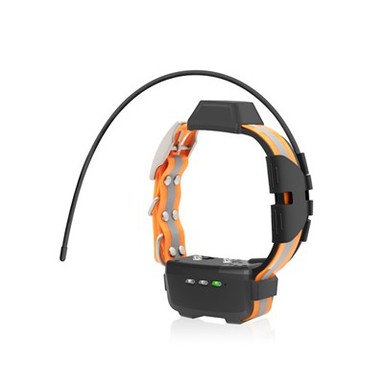
For his safety, choose collars adapted to his size and morphology. Collars with GPS tracker exist to track the location of your dog (TR Dog Houndmate 100/R50 GPS Tracking Collar is one of the newest E collars in the market), and this, at any time. Otherwise, opt for bells and bells : the sound emitted by its accessories helps to easily locate the position of the dog. Very useful when hunting in a very dense biotope.
Tip: When hunting in rivers, avoid wearing a dog collar. In case of high currents, your could get caught in branches while hurtling down the stream.
Leashes and leads for dogs
Whether it's learning to abseil and heel or for training in a large space, arm yourself with excellent quality leashes and lanyards! Remember that the leash is a must for all dog owners.