Training Retriever Hunting Dogs (Part 1)
Sep 15, 2022
Training retriever hunting dogs
How to train a retriever hunting dog, step by step!
Very useful for their masters, retriever hunting dogs did not learn their job in a day! The passion for hunting is not enough, it is also necessary to show patience, rigor in training and consistency in the training stages. At what age to start ? How to teach safety rules? And to recover unchewed prey, how does it work? We tell you everything in this article!
What is a retriever hunting dog?
As an excellent hunter, the retriever dog was trained to flush out, pursue and delicately recover game in order to bring it back to its master. Conscientious and versatile, he manages to work in various environments (eg fields, marshes, rivers).
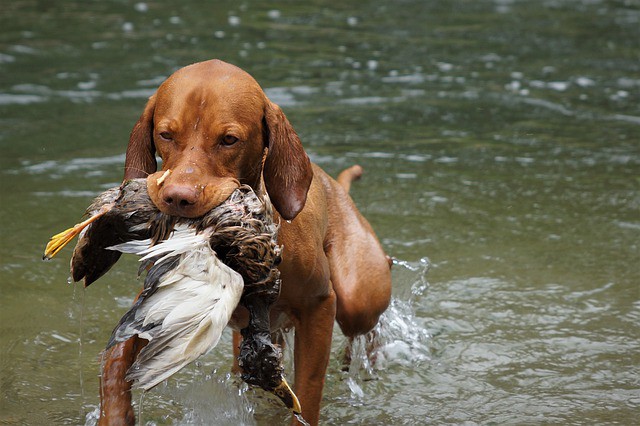
Retrieving dogs are an excellent choice for spotting and tracking aquatic birds such as ducks or waders.
This type of dog is also very useful for hunting birds in the highlands (e.g. pheasants). Working close to his master, he quickly flushes out game after a precise shot from the hunter.
To succeed in its mission, the retriever dog must combine three main qualities:
Exceptional flair for quickly spotting game
An iron patience that will allow him to stay put, in his hiding place, while waiting for the hunter's signal
And an excellent memorization to correctly locate the point of fall of the fallen bird (the marking)
Obviously, other skills such as obedience, complicity with its handler, endurance and tenacity are to be favored in this type of hunting dog.
What Breeds of Retrieval Dogs Should You Choose?
While it is possible to train any breed to retrieve, some dogs have natural abilities for this task. they have the particularity of being excellent swimmers and have a waterproof coat:
The Labrador Retriever:
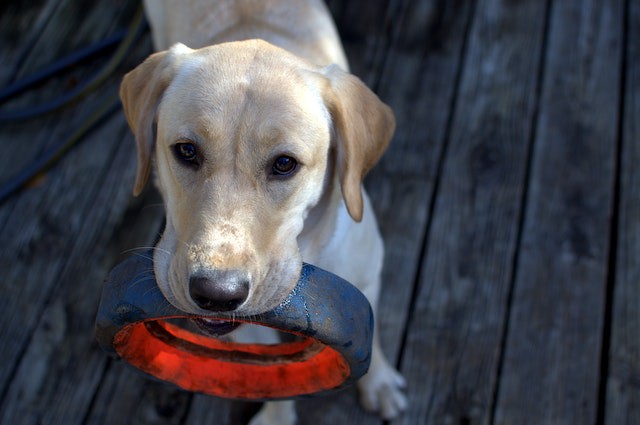 endowed with A remarkable memory for finding game, and a developed sense of smell, he has a good sense of observation. Agile and motivated, he does not hesitate to cross the brush and ensures a good performance in the marshes, in the woods or on the plain.
The Golden Retriever:

This breed particularly likes to exercise in water. Attentive and determined, he does not need to be asked to dive and look for game in the middle of a pond. Intelligent, he has no trouble mobilizing his attention and keeping calm.
The Chesapeake Bay Retriever:
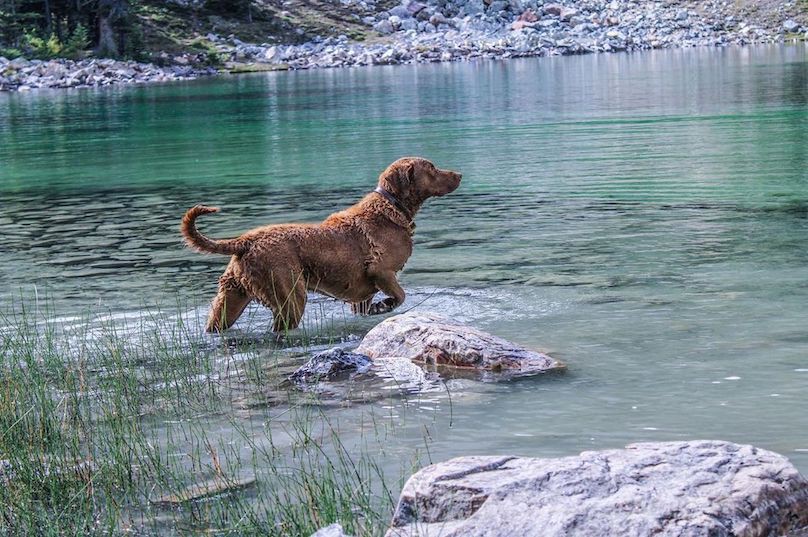 Just as comfortable on water as on land, it enjoys great versatility. With hare feet, he can easily dig his way and face muddy terrain. Robust, this valiant dog does not let bad weather stop his efforts.
The Curly Coated Retriever:
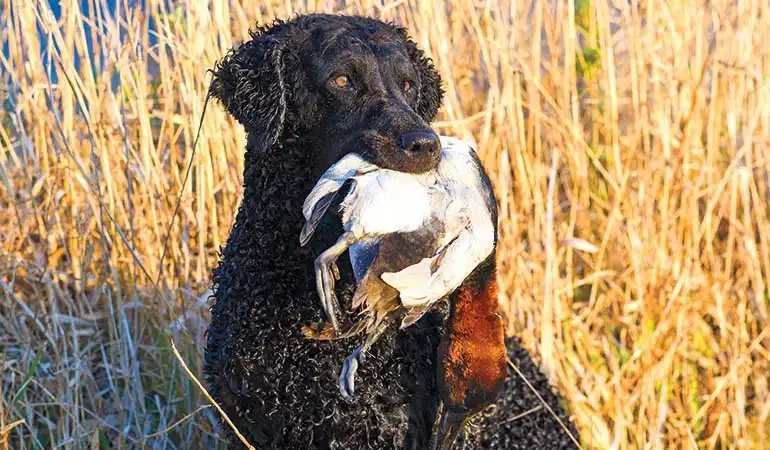 Active and enduring, it is intended for the retrieval of ducks in the water. Its ultra-waterproof coat dries quickly and does not cling to the brambles and grasses present on the hunting grounds. Devoid of undercoat, it will be necessary to pay attention to its health in the event of negative temperatures.
The Nova Scotia Duck Tolling Retriever:
 Curious, agile and very receptive, this skilful swimmer is very tough in the water. Passionate about the report, he has a cheerful character at work.
The Flat Coated Retriever:
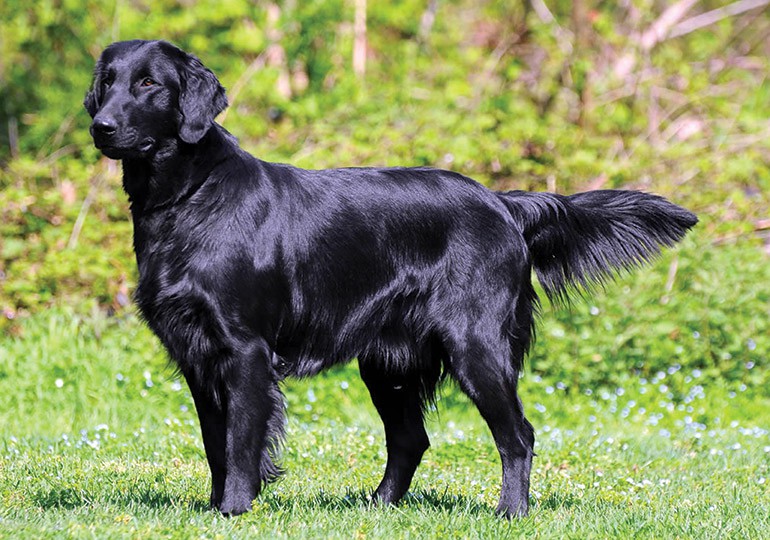 Still little known, it is just as comfortable as its cousins in an aquatic environment. Fiery and motivated, it is sometimes difficult to curb his enthusiasm when he is focused on his work.
You can also turn to other breeds, also appreciated for their efficiency, such as the Irish Water Spaniel, the French Spaniel, the Barbet or the Poodle.
Good to know: make sure that your future companion comes from a real line of work. Get closer to a breeder practicing serious hunting and, if possible, ask the breeder to provide you with the pedigree over 3 or 5 generations.
At what age should you start hunting with your retriever dog?
Even if it is tempting to start as soon as possible, do not forget that a hunting ground presents undeniable dangers for the dog. It is therefore recommended to wait until your dog has finished growing before putting him to work: on average, from 1 year, or even 1.5 years depending on the breed.
Of course, it is possible to familiarize him with the report and different environments well before actually making him hunt!
Some masters choose to start very early (4 or 5 months), but with the rule of going slowly and not exceeding 2 hours of work per week.
Regardless of the strategy adopted, always take into account the growth and health of your puppy. Despite a developed predation instinct and an undeniable motivation, at this age, he will still find it difficult to remain attentive for a too long period. Avoid overwhelming him with orders and discouraging him from working.