What Is The Ideal Range For A Hunting Dog Tracker? A Complete Guide
Nov 27, 2026
When hunting in forests, mountains, or remote countryside, keeping track of your hunting dog is essential for both safety and efficiency. A reliable dog tracker helps hunters monitor their dogs' locations, follow their movements, and respond quickly when they move too far away. But what is the ideal range for a hunting dog tracker? The answer depends on the tracking technology, terrain, and hunting conditions.
1. Understanding Tracking Range
The tracking range refers to the maximum distance at which a handheld device can receive location information from a GPS dog collar. Different tracking systems offer different ranges.
Traditional radio-based dog trackers usually have a limited communication distance. Under ideal conditions, some professional systems can provide a range of several kilometers. However, hills, dense forests, buildings, and other obstacles can weaken radio signals and reduce the effective distance.
For hunters who frequently work in large hunting areas, choosing a tracker with a longer communication range provides greater flexibility and peace of mind.
2. Radio Tracking vs. 4G Tracking
Most modern hunting dog trackers use radio communication, cellular networks, or a combination of both.
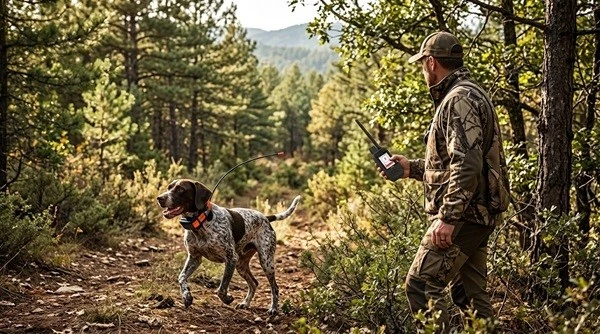
Radio Tracking: Radio technology is particularly useful in remote areas where mobile network coverage is unavailable. Depending on the equipment and environmental conditions, professional radio tracking systems can reach approximately 10–15 km in open terrain.
4G Tracking: Trackers using 4G communication can transmit location data over much longer distances, provided cellular network coverage is available. This makes them useful for hunters who need to monitor dogs across large geographical areas.
Dual Communication: A combination of radio and 4G technology offers greater flexibility. When cellular coverage is unavailable, radio communication can help maintain contact with the dog. When a mobile network is available, 4G can provide additional tracking convenience.
3. How Terrain Affects Tracking Distance
The advertised range of a hunting dog tracker is usually measured under favorable conditions. In real hunting environments, actual performance can vary considerably.
Dense forests, steep mountains, valleys, and thick vegetation may interfere with radio signals. Even a powerful tracker may experience reduced communication distance when the handheld device and dog collar are separated by hills or other physical obstacles.
Therefore, hunters should consider their typical hunting environment rather than relying only on the maximum range advertised by manufacturers.
4. What Range Should You Choose?
For occasional hunting in small areas, a basic tracking system may be sufficient. However, hunters working with multiple dogs or covering extensive mountain and forest areas should consider professional tracking equipment with a longer communication range.
A good hunting dog tracker should offer:
Long-distance communication for large hunting areas.
Reliable GPS positioning with accurate location updates.
Radio communication for areas without mobile coverage.
4G connectivity for extended-distance tracking where network coverage exists.
Offline maps for navigation in remote environments.
Waterproof protection for rainy weather and wet terrain.
Stable performance when tracking multiple dogs.
5. Choose a Tracker That Matches Your Hunting Needs
There is no single ideal tracking range for every hunter. The best choice depends on the distance your dogs typically travel, the terrain you hunt in, and the communication technology available in your area.
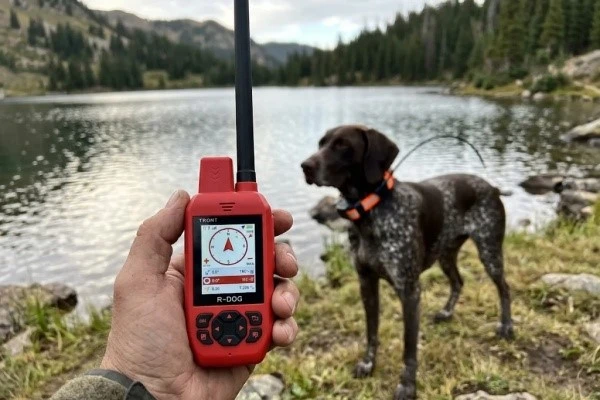
Modern dual-communication systems, such as the TR-DOG TRON7 / R70, combine GPS positioning with 4G and radio communication. With radio communication reaching up to 15 km in open terrain and 4G connectivity available where cellular coverage exists, hunters can enjoy greater flexibility when tracking their dogs.
The system also supports offline maps, real-time location updates, and multiple-dog tracking, making it suitable for demanding hunting environments.
Conclusion
The ideal range for a hunting dog tracker is not simply about choosing the device with the biggest advertised number. Reliable communication, accurate positioning, and performance in challenging terrain are equally important.
For serious hunters, a professional GPS tracker with long-range radio and 4G communication provides a practical solution for keeping dogs visible, improving hunting efficiency, and ensuring greater safety in the field.