How Far Can A Hunting Dog Be Tracked? Understanding GPS Range In The Field
Oct 13, 2026
For hunters who rely on dogs to locate and pursue game, knowing their dog's location is essential for both safety and hunting efficiency. One of the most common questions hunters ask is: How far can a hunting dog be tracked? The answer depends on the tracking technology, terrain, signal conditions, and equipment being used.
Modern dog tracking systems have made it easier than ever to monitor hunting dogs across forests, mountains, and remote hunting grounds. Understanding how these systems work can help hunters choose the right equipment for their needs.
1. GPS Tracking: Does Distance Really Matter?
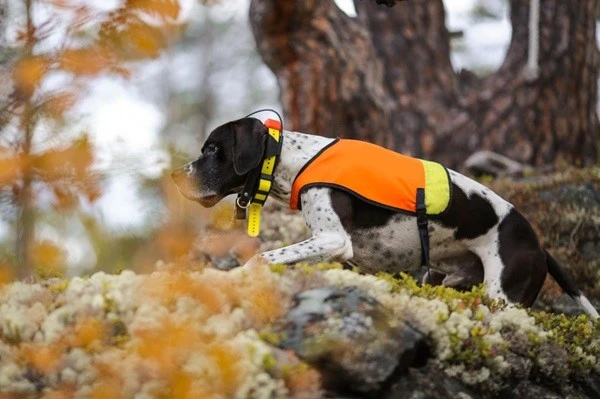
GPS technology determines a dog's position using signals from satellites. Unlike traditional radio tracking, GPS positioning itself does not have a fixed distance limit between the dog and the hunter.
However, receiving the dog's location requires a communication method, such as a cellular network, radio signal, or satellite connection. This is where the tracking range becomes important.
With a cellular GPS collar, hunters can potentially track their dogs over long distances, even when the dog is many miles away. However, the collar and the hunter's device generally need suitable network coverage to exchange location data.
When cellular coverage is unavailable, a GPS collar that relies only on mobile networks may stop updating its location in real time.
2. Radio Tracking: How Far Can It Reach?
Radio-based tracking systems are especially useful for hunting in remote areas where mobile networks are unreliable or unavailable.
Depending on the equipment, antenna design, frequency, terrain, and environmental conditions, some professional radio tracking systems can reach several miles. Certain systems advertise ranges of up to 10–15 kilometers (approximately 6–9 miles) in favorable, open conditions.
However, actual performance can be significantly lower in dense forests, deep valleys, and mountainous terrain. Hills and other physical obstacles can weaken or block radio signals.
For hunters who regularly work in challenging environments, choosing a tracking system with a reliable radio connection can make a significant difference.
3. Why Terrain Affects Tracking Distance
The same tracking device may perform very differently in different environments.
In open fields, radio signals can travel farther because there are fewer obstacles between the dog and the hunter. In dense forests, thick vegetation and uneven terrain can reduce signal strength. Mountains and deep valleys may create areas where communication becomes difficult or temporarily impossible.
The hunter's position also matters. Moving to higher ground may improve reception and help restore communication with a distant dog.
Understanding the local terrain and testing equipment before a hunt are important steps toward maintaining reliable contact.
4. GPS vs. Radio: Which Is Better for Hunting Dogs?
Both technologies offer valuable advantages, and some modern systems combine them to provide more flexible tracking.
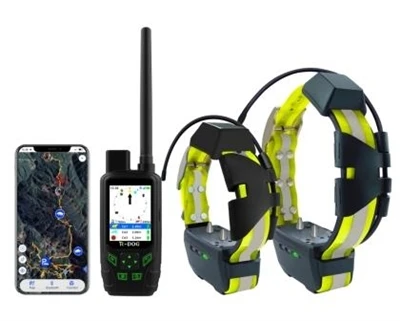
GPS provides accurate location coordinates, allowing hunters to view their dog's position on a digital map. Radio communication helps transmit location information directly between compatible devices, even without cellular coverage.
A dual-communication system combining GPS positioning with radio and cellular connectivity can offer additional flexibility. Where mobile coverage is available, cellular communication may support tracking over much greater distances. When the network disappears, radio communication can help hunters maintain contact within its effective range.
The best choice depends on hunting conditions, local regulations, and the distance over which dogs typically work.
5. How to Keep Your Hunting Dog Within Reach
Even with advanced tracking technology, hunters should take several precautions:
Check the equipment: Fully charge the collar and handheld device before heading into the field.
Test the signal: Confirm that the system is communicating properly before releasing the dog.
Understand the range: Learn the manufacturer's stated range and recognize that real-world performance may vary.
Use offline maps: Download maps in advance when hunting in areas with poor internet coverage.
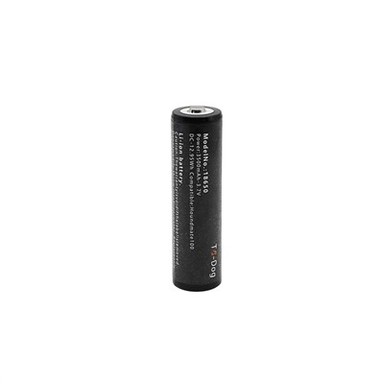
Monitor battery life: Long hunting sessions require sufficient power for continuous location updates.
These simple habits can help reduce the risk of losing contact with a hunting dog.
Conclusion
So, how far can a hunting dog be tracked? The answer ranges from several miles with some radio tracking systems to potentially unlimited practical distances with cellular GPS tracking wherever suitable network coverage is available. Actual performance depends on the technology, terrain, and operating conditions.
For serious hunters, a reliable tracking system is more than a convenience. It helps them monitor their dogs, coordinate their hunting activities, and respond more quickly when a dog moves beyond sight.
Choosing a hunting dog tracker with dependable positioning, suitable communication range, and reliable performance in remote environments can make every hunting trip safer and more manageable.