Electronic Monitoring Bracelets Are Only Crime Deterrence Tools, They Can't 'Fix' Offenders (1)
Jul 05, 2022
The man arrested after a deadly gun attack in Darwin Tuesday night is reported to have been on parole and wearing an electronic monitoring bracelet.
This leads to the same reaction we see following any high-profile crime. How could such a thing happen?
People may speculate that the criminal justice agencies involved have somehow dropped the ball. The offender was on their radar, after all.
While this finger-pointing may serve a cathartic function, it is important we also question our expectations before assuming a failure occurred.
We need to understand what electronic monitoring intends to achieve, how it works, and what its capabilities and limitations are.
Electronic tagging
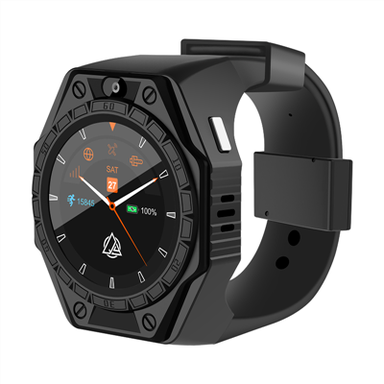
In the context of the corrections system, electronic monitoring refers to the tagging of a person as a form of surveillance, usually in the form of a GPS-enabled ankle bracelet.
In Australia, each state and territory uses electronic monitoring differently, guided by their own legislative frameworks.
Practices vary considerably between jurisdictions. For example, in some places, certain offenders are targeted (high-risk recidivists, those who repeatedly reoffend, for example). In others, specific types of offenses are the focus (such as child sex offenses).
The application of electronic monitoring even differs between offenders, as the supervising agency uses it for reasons specific to each person.
A police department might use electronic monitoring to ensure a domestic violence perpetrator does not visit the victim before a trial. A probation officer might require an offender to wear a bracelet for 12 months to ensure they are attending treatment and meeting their curfew. A parole officer could place the GPS tracking condition on an offender for the first three months following release from prison to better understand how the parolee spends his or her time.
Each of these experiences will be quite different, as each is intended to fulfill a unique aim.
Ordinarily, electronic monitoring is used as a tool of incapacitation and deterrence.
In the first instance, an offender may be told to follow a particular rule—for example, to be home by 8pm, to stay away from the victim, to attend a treatment program, or not to go within 1km of a school. Electronic monitoring allows authorities to monitor the person's compliance with such a condition.
In the latter instance, an offender may be deterred from certain behavior if they believe their actions are likely to be detected through electronic monitoring.
To be continued.