HUNTING TIPS When Can Dogs Take Part in The Hunt?
Aug 13, 2022
When you decide to have a hunting dog, the objective is obviously to adopt an effective hunting companion who will also be happy with you on the days when you cannot hunt. Having a hunting dog must be a source of many experiences, but when can you take a dog hunting?

Hunting dog training, step by step
The step-by-step principle is also followed for hunting dog training. Therefore, before taking my dog hunting, I always start by getting him used to it. He must not start on the first hunting trip of the season and do what he wants to do. This is a process of gradually completing the training that took place before the hunt. For me, good training is one of the cornerstones of having a good hunting dog!
We all have different demands on our dogs, and different wishes regarding what the dog should be able to do on the hunt. Different breeds of hunting dogs have been bred for generations for several hunting purposes, and these characteristics need to be stimulated during training and then during the hunt. I have known many gun dog owners who are eager to take their young dog hunting and, in their eagerness to show off their dog's abilities, the dog takes part in hunting parties even before being ready.

Correcting a behavior can be complicated and so there are conditions the dog must meet before it is ready to hunt. The basics must be acquired in your garden and then only after on different types of terrain. I have extensive experience in terms of training hunting dogs; I make them do exercises that resemble real hunting situations as much as possible!
The basic training is generally the same regardless of the breed, but the specific training to follow depends on the dog you have and the type of hunting you practice. Generally, this principle should be followed; "What is expected of the dog when it comes to hunt, must be acquired during the training that precedes the hunt".
An obedient hunting dog is a pleasure
Almost all hunters have known another hunter whose dog is exemplary. He works for his master, returns when called, brings back the game and behaves in an exemplary manner. It's a pleasure, and we all want this type of dog.
Others may have experienced the opposite... a disobedient dog, which runs more or less where it wants, a distraught master who hisses more than necessary. Nobody wants that! If you are the owner of such a dog, you can (perhaps) expect that invitations to hunting parties WITH your dog will become increasingly rare. And that's a shame. This is why it is important not to take your dog hunting too early.
Even if the dog reacts well in usual environments, it is different when participating in a hunting party. Particularly if it is hunting in game-rich terrain and hunters often shoot.
Therefore, it is advisable that new dog owners have experienced training companions who can advise them on training, but who can also tell them if the dog is ready for the hunt.
On your marks, get set, hunt
It is essential to work with the dog before the hunting season. Hunt training is important, but so is obedience training with an emphasis on contact training. The dog must be able to fetch in order to fetch cold game to bring it back to its master. It is also very important that the dog is accustomed to the shots, so that he does not have a bad experience the first time he hears a shot on the hunt.
There is no definite rule indicating that the dog is ready. They are different individuals and therefore will be ready at different times. In order to obtain better results, it is recommended at the beginning that the dog participates in small hunting parties. It is best to hunt in the presence of one or two other armed hunters and to leave your own rifle at home so that you can concentrate 100% on the dog. By hunting with few participants, it is easier as the handler of the dog to control the dog and the events. We can demand the same things from the dog as during training, the difference is that now it is in a real situation. You can determine when and how long the young dog will participate, and then assess where and when he will be released with another hunting dog.
During these small hunting parties, you can also release the dog alone, then gradually release it with another hunting dog, preferably well trained. During training, the dog must learn to work with other dogs. It can be frustrating if your dog focuses too much on the dog(s) of other hunters.
He will then forget to hunt for his master. During his training, your dog must be confronted with distractions and provocations in order to check if the training is good and so that the dog knows that he is not always the one who must carry out the tasks.
Experience is worth gold
When you take your dog hunting the first few times, don't let him hunt all day. This is both a physiological and a mental issue, as the dog will find it difficult to integrate the many experiences. When the dog is tired, its concentration decreases. He may start chasing furry game or not bring the game back.
The next time you take your dog hunting, you can (perhaps) let him hunt a little longer, so that he gradually gains experience. We all have different conditions and possibilities, but it is clear that the more a dog participates, the more experience he acquires. Therefore, it is simply impossible to estimate how long it takes to train a dog for hunting. Dogs are different and we have different requirements.
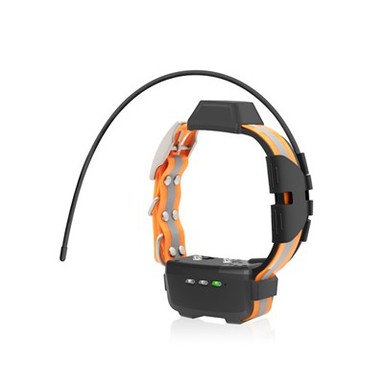
Use Hunting dogs GPS Tracking and Training E-Collars
The Tracking and Training E-collars are very helpfull when it comes to training your dogs , using a good Tracking and Training E-collar will let you control the behavior of your dogs and also allows you to track them when they are hunting in the open fields . TR-Dog Houndmate 100/R50 Tracking and Training E-Collar is one of the newest Hunting dogs GPS Tracking and Training E-Collars , it has all what you need to train your dogs and hunt with them safely.

Continue training
Hunting with a dog that knows what to do is great. It's fun, and the more experience the dog gets, the better it becomes. A hound that lifts a pheasant or woodcock and allows you to shoot it is a powerful hunting experience. Similarly, when the dog succeeds in bringing back a game that is difficult to retrieve or when after a long hunt for a fissiped he succeeds in his mission, then the satisfaction is at its height.
But, if you want your dog to stay well trained over time, maintaining the training is essential. It's nice, and you can absolutely demand more of the dog in training situations, so that in the next season he can tackle even more complicated tasks and be the source of more experiences. A well-trained hunting dog is a real treat.
Good luck