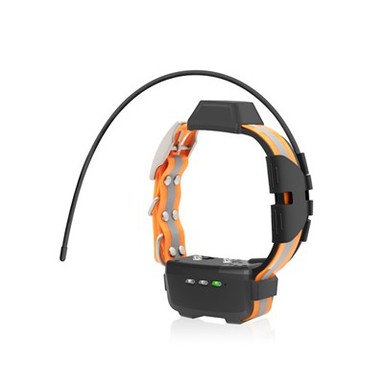
Can You Put A Dog Collars With GPS Trackers in Your Dog?
Jul 15, 2022

Can you put a dog collars with trackers in your dog?
Have you ever had one of those exciting times when your dog ran away or went missing? So are we.
Most of the time, they'll be right around the corner of a hedge, but sometimes they can cause more serious trouble on their own and need you to find them as soon as possible.
One of the biggest concerns is that they get stolen. With dog theft at an all-time high, owners are rightfully concerned and looking for ways to keep their dogs safe.
This is what leads thousands of us to ask, "Can I get a GPS implant or microchip on my dog?"
The answer is no, because the technology doesn't exist yet.
To learn more, we dug down the facts when tracking your dog.
What's in a dog's microchip?
When you microchip your dog, a microchip the size of a grain of rice is implanted under the skin between your dog's shoulders. It was so small they didn't even notice it.
Your dog's microchip contains one piece of information, a reference number. When a veterinarian or dog caretaker scans your dog's microchip, they can find the reference number and search in the pet microchip database. This will reveal a profile with your contact details, which means you can be reunited with your dog right away.
Your dog's microchips are designed to identify their owners if they are picked up when lost, similar to the tags they wear on their collars. It can't track your dog's location and tell you where they are at any given moment.
Don't forget that microchipping your dog is a legal requirement in the UK and details will be updated promptly.
What types of dog collars with trackers are there?
There are several different types of dog collars with trackers on the market. Some use GPS technology, while others use Bluetooth. Bluetooth trackers have a small range, meaning you can only track your dog when it's nearby, while GPS devices enable you to find your device's location from almost anywhere in the world.
Most GPS dog collars with trackers are either complete collars or devices that attach to collars or harnesses. This means that they usually go unnoticed by all but the smallest dogs.
Dog collars with trackers typically allow you to see your dog's real-time location with an accuracy of about seven meters. This makes them very useful if your dog runs away or gets lost because you can find them right away and bring them home.
Of course, if you're relying on dog GPS trackers to find dogs when they go missing, you'll want to choose an accurate device with good battery life that's waterproof and sturdy enough to stay on the collar throughout your dog's adventures.
That's where the Tr-dog dog collars with trackers excels. Not only does it have excellent accuracy thanks to the latest 4G module technology, but it also comes with a 3500mAh battery. Even better, it's one of the smallest and lightest on the market, and it's completely waterproof, dustproof, and risk-proof.

Can you implant a dog with GPS?
GPS dog trackers contain sophisticated hardware for receiving and interpreting location information from satellites. Currently, the hardware is too large to fit inside an implant that sits under a dog's skin.
Also, unlike your dog's microchip, GPS trackers require charging. There simply isn't a practical or ethical way to include and charge a battery in a device implanted under your dog's skin.
Will GPS trackers implant technology exist?
With the rapid development of technology, nothing is impossible! Maybe innovative pet tech companies can use nanotechnology and wireless charging to create a device as unobtrusive as your dog's microchip.
For now, though, the technology has a long way to go.
Can a GPS tracker keep my dog safe?
A GPS tracker can be an invaluable tool in your arsenal to keep your dog safe, happy and healthy. Used in conjunction with your dog's microchip and a tag with your details, it will help you ensure your dog will eventually be found and returned to you if they get lost.

Of course, dog theft remains a significant problem for many dog owners. While implantable dog trackers don't exist, there are still many things you can do to keep your dog safe, such as security wires and choosing safe walking routes.
it might be tempting to opt for cheaper alternatives, you should proceed with caution – at the end of the day, you need to know that when you need to use the GPS tracker it'll work, and quickly.